
BLOG

It’s time for SUMMER HORROR!
Beach horror movies other than Jaws!
I’m not a fan of the heat, but I LOVE summer horror! Of course, one of the most popular summer horror movies is Jaws, but what about other beach horror movies that are just as thrilling? Here’s some recommendations!


Piranha is just camp b-horror fun! As you can probably guess, a bunch of human-munching piranhas are in the water, and they’re hungry!
Sweetheart is one of the most underrated movies ever! At least, in my opinion. It’s a tense story of a young woman trapped on a deserted island while a creature hunts her.
Beach House features a struggling couple who escape to … you guessed it … a beach house to try and fix their relationship. Soon, they’re interrupted by an older couple and a mysterious environmental concern.
Who doesn’t know The Meg? Okay, just in case you don’t The Meg is about a mega shark that escapes the bottom of the ocean and reeks havoc.
Happy Summer!

HAPPY PRIDE!
IT’S HERE!!!!!!! GET READY FOR FUN PRIDE CONTENT!

Please note, all month the templates are provided by H.Everend who you can hire for your social media needs :)

What is Pink Horror?
What is pink horror? Can men write it? Which books have I written that are pink horror? We look at these questions and discuss this important topic!
The Definition of Pink Horror:
It’s a new term for an old concept. Pink horror is all about uplifting women, femmes, and non-binary writers. It focuses on the real issues these communities face and contains characters, plots, and values with these individuals in mind. Also, there’s plenty of toppling the patriarchy!
Recently, an individuals reached out and asked if all pink horror includes non-binary individuals. I hadn’t even considered otherwise; to me, pink horror doesn’t exist without all non-binary writers; however, after further researched, I noticed some definitions excluding this group of authors.
While the idea of pink horror may be rooted in women and femmes, feminism is not. Intersectional feminism is broad, inclusive in all respects, and effects everyone (even those who deny the need for feminists). I consider pink horror feminist writing, so it makes sense to me that the inclusivity would be extended.
Also, pink horror doesn’t have to be just focused on the seriousness or tragedy of this community. It can be silly, funny, upbeat, and really, anything you can dream up, as long as it holds to the overall tenants of the pink horror definition, which really, is still evolving, so unleash your inner pink feminist and get creative!
Who are the Pink Horror Audiences?
Literally, anyone and everyone. While it’s certainly written for a certain audience, I highly encourage cis-hetero-white men to read and absorb the stories. These are the men at the top of the patriarchy, and it’s always important for this group to check themselves, their actions, and the actions of other men. A great way to understand the point-of-view outside the patriarchy is through storytelling. So, if you’re the leaders of the patriarchy, please pick up some pink horror and give it a read with an open mind!
Can Cis-Hetero-Men Write Pink Horror?
In general, I don’t like censoring what an author can and can’t write. I find the mindset of “this isn’t for you” exclusionary (even if it’s true). My idea of toppling the patriarchy means working with all communities, even those who have permanent seats at the proverbial table. That doesn’t mean everyone agrees with my opinion, and I completely understand that. Reading about a personal topic by someone who hasn’t lived it can be extremely frustrating to say the very least. So, back to the original question. I’d say every cis-hetero-man will have to decide that for himself; however, if his book takes the place of an equally qualified story written by a member of a marginalized community, the man should be prepared for backlash. While writing pink horror as a man and publishing it for free on a blog with no intention of progressing towards publication where they profit is one topic, being published and becoming a best seller and profiting while a marginalized writer is tossed into the slush pile is a different topic.
In a perfect world, in my mind, there would be room for all of us at the table. We have a long way to go for that.
How Are My Books Pink Horror?


Dissociate Identity Disorder: Mental Health Awareness Month
It’s Mental Health Awareness month which means we’re going to be diving in to how the horror genre handles this sensitive topic. We’re going to talk about specific mental health concerns, movies and books that get it right (and wrong), and share personal stories to help spread awareness and break the stigma!
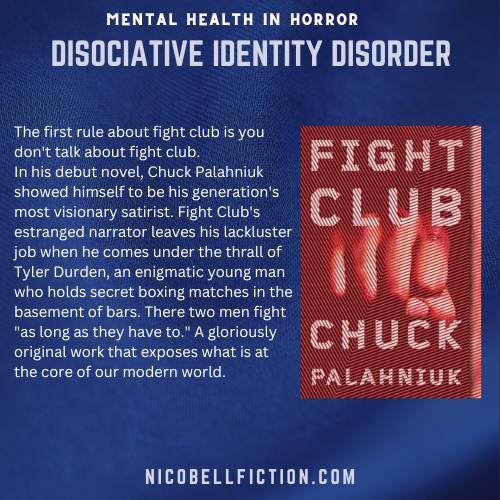
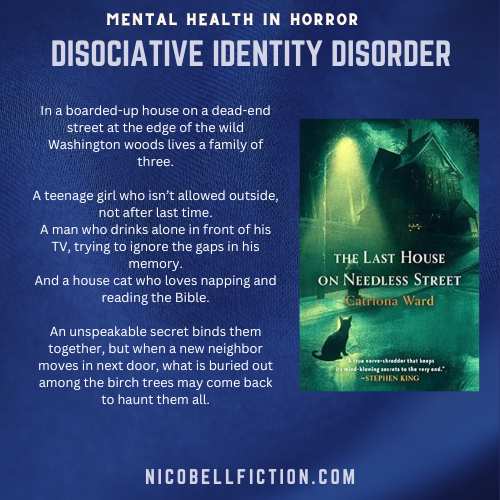
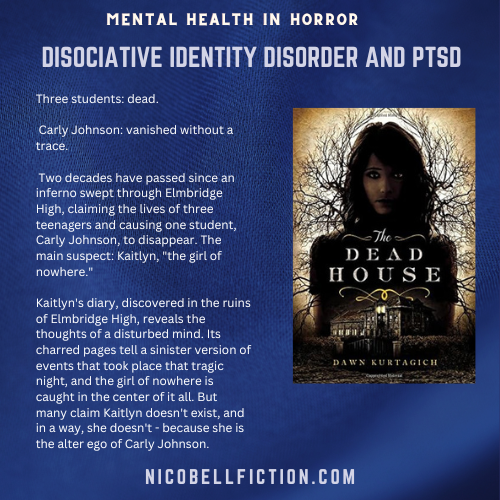
Today, we dive into dissociative identity disorder, a commonly used plot device within the horror community. Often, it feels like writers are quick to add mental illness as a character plot point without doing proper research and presenting the mental illness with accuracy and respect. In my opinion, these are some books that do it right. Note: I realize Fight Club isn’t a horror book, but I believe it handles the topic well.

3 Body Problem: Not A Problem for Viewers
The 3 Body Problem Series on Netflix isn’t a Problem for Viewers

I’m about halfway through the new Netflix show 3 Body Problem, so let’s chat about this big budget adaptation.
First, you may be like me and have started the series completely unaware that this is adapted from a book series written by Liu Cixin. The first book, The Three-Body Problem, seems to follow closely to the Netflix show as ties into China’s Cultural Revolution where an alien signal is first received. Not having read the books (yet), I can’t say if the show follows the rest of the series, but as a stand alone from the literature from which it’s based, Netflix seems to have a hit on their hands.
The show vacillates from China’s Cultural Revolution to present day London where scientists are experiencing high suicide rates. Slowly, the series pieces together an intriguing puzzle linking the two and weaving mystery into a wonderfully tense plot.
So what is the 3 Body Problem?
I won’t give too much away since this is certainly a show worth watching but know that the 3 body problem sits at the heart of the alien contact. While you may think you understand the intention of this integral story element, there is a clever pivot which shifts the focus of the characters’ overall intentions.
Who is in the cast?
The characters come to life with a dynamic and talented group of actors. Here’s the core five:

3 Body Problem Cast
Eiza González (I Care A Lot, Godzilla vs. Kong, Fast & Furious Presents: Hobbs & Shaw) plays Auggie Salazar, a brilliant nanotech expert on the verge of revolutionizing the industry.
John Bradley (Game of Thrones, North Shore) plays the lovable (if not stereotypical) silly sidekick and comedic relief who quit his posh college life and to start a snack business empire.
Jess Hong (Inked, The Brokenwood Mysteries) plays a genius theoretical physicist who finds herself entangled in a complex web
Jovan Adepo (Babylon, Watchmen (series)) plays the scientist who isn’t as serious as the rest but a loyal friend
Alex Sharp (How to Talk to Girls at Parties) plays the lovable, if not a bit sad, physics teacher who receives life changing news
From what I can tell from reading about this series online, the book has very different characters, but again, I’ve yet to read it.
What I can say is that halfway into the series, I’m completely hooked. There’s tons of twists and curious moments, intrigue and mystery, and plenty of tension. To watch, go to Netflix!

Three Quick Queer Horror Book Recommendations
A quick recommendation to help diversify your reading! Three queer horror book recommendations certain to thrill and scare!
It’s time to diversify those bookshelves! If you’re new to Queer horror and looking for some recommendations, here are five incredible queer horror books written by openly queer authors. Check them out:
Blood and Flowers by Mars Adler
Two warring vampire families must set aside their differences to solve the disturbing mystery of a cursed house.

Brainwryms by Alison Rumfitt
Shocking, grotesque, and downright filthy, Brainwyrms confronts the creeping reality of political terrorism while exploring the depths of love, pain, and identity.
When a transphobic woman bombs Frankie’s workplace, she blows up Frankie’s life with it. As the media descends like vultures, Frankie tries to cope with the carnage: binge-drinking, sleeping with strangers, pushing away her friends. Then, she meets Vanya. Mysterious, beautiful, terrifying Vanya.
The two hit it off immediately, but as their relationship intensifies, so too does Frankie’s feeling that Vanya is hiding something from her. When Vanya’s secrets threaten to tear them apart, Frankie starts digging, and unearths a sinister, depraved conspiracy, the roots of which go deeper than she ever imagined.

Cuckoo by Gretchen Felker-Martin
From Gretchen Felker-Martin, the acclaimed author of Manhunt, comes a vicious new novel about a group of teens who must stay true to themselves while in a conversion camp from hell.
Something evil is buried deep in the desert.
It wants your body.
It wears your skin.
In the summer of 1995, seven queer kids abandoned by their parents at a remote conversion camp came face to face with it. They survived—but at Camp Resolution, everybody leaves a different person.
Sixteen years later, only the scarred and broken survivors of that terrible summer can put an end to the horror before it's too late.
The fate of the world depends on it.


BOOK REVIEW: We’re Not Ourselves Today : 13 Tales of Pulp Horror by Lydia Prime & Jill Girardi
REVIEW: We’re Not Ourselves Today 13 Tales of Pulp Horror
Lydia Prime & Jill Girardi
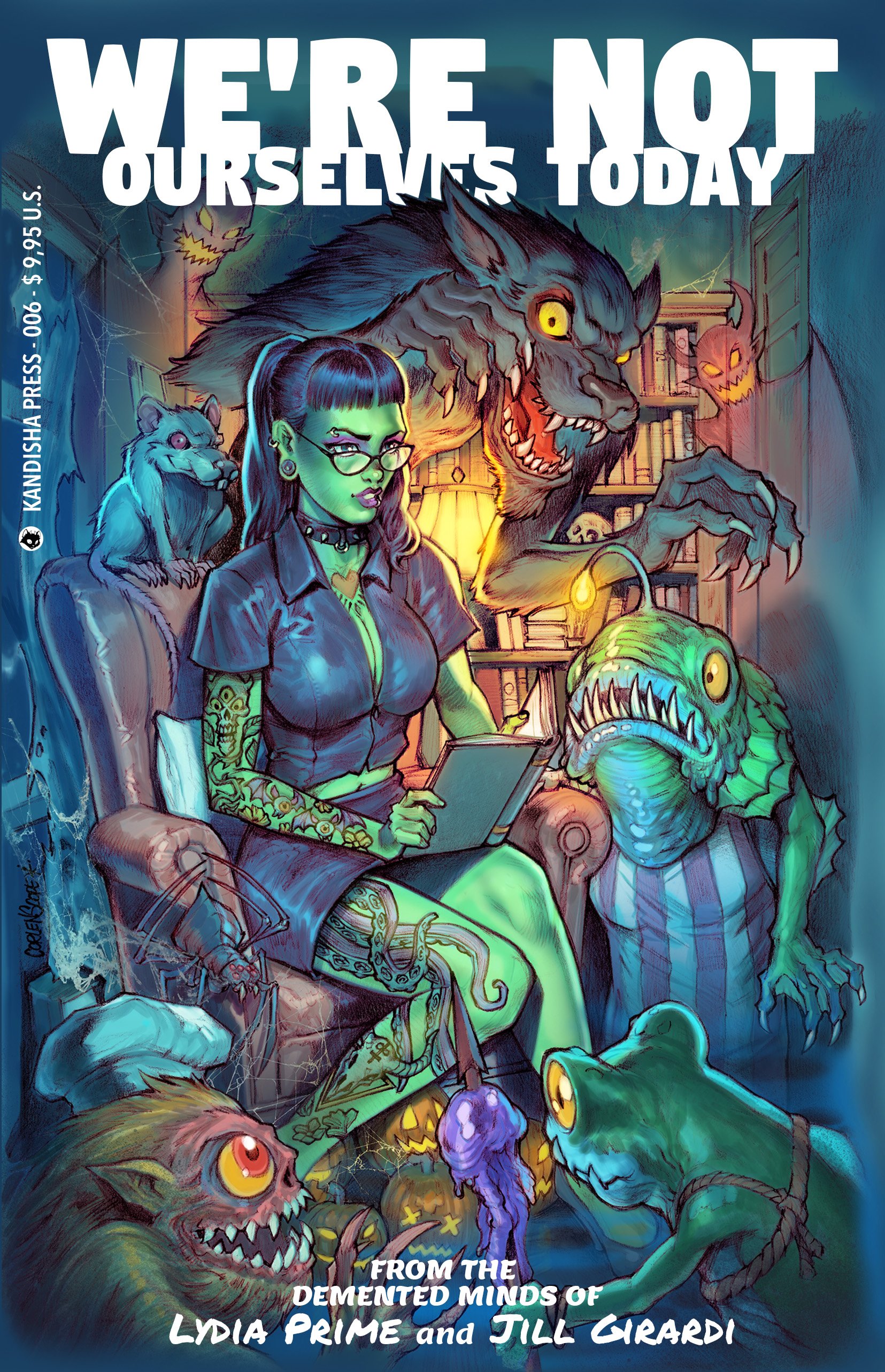
Prime and Girardi craft thirteen spine-tingling short stories certain to terrify and disturb. From garbage demons and werewolves to curses and delicious revenge, each tale weaves memorable monsters with high tension and horrific stakes. Some readers may gravitate a tad more toward Girardi’s haunting writing style while others may lean into Prime’s stomach-churning scenes, but overall, Prime and Girardi shine equally, sharing the spotlight with expert prose that invokes nightmares long after the final page.
Each story features a monster – whether human or otherwise. Familiar creatures such as werewolves are featured in multiple stories but with clever and refreshing twists to keep readers salivating. Other times, original monsters are born from the wickedly twisted imaginations of Prime and Girardi. Creativity oozes from the pages as does a decent about of blood and guts; however, inserted into the terror are occasion moments of absurdist levity such as in the opening story “The Letter” by Prime, who takes a gruesome premise of an expectant mother receiving a mysterious letter and pivots in a campy unexpected way. The creature in “The Roiling” by Jill Girardi also has a campy vibe undertone and would make an incredible onscreen villain, if ever adapted for television. In this piece, Frog People have taken over and Sherman Tan, a rather cowardly human protagonist, must figure out how to survive the new landscape.
The overall anthology feels like stepping into a wickedly intense 80s fright night marathon. Some of the content may be shocking for readers (child death, domestic abuse) as neither Prime nor Girardi hold back, but for those open to extreme horror with splashes of gore and tons of uniquely crafted monsters, this is a must read! Perfect for horror fans looking for creature features, women written horror, and nightmare fuel!
Interview with Literary Speculative-Fiction Author Emily J. Weisenberger
Interview with Literary Speculative-Fiction Author Emily J. Weisenberger
Pronouns: she/her
Welcome Emily! For readers just discovering your work, could you please give a little introduction of yourself?
I’m an early-career writer of literary speculative fiction. I have a few short stories for adults out in the world, and I’m currently working on a novel for children. My style is a little wacky, a lot of heart.
Your website (https://www.emilyjweisenberger.com/) describes you as a “writer of social justice-forward stories for children and adults.” That sounds amazing! What inspired you to take this approach in your writing?
I have to give the credit to my education in applied anthropology! As Ruth Benedict, a founder of modern anthropology, is quoted as saying, “The purpose of anthropology is to make the world safe for human differences.” To me, that’s what justice is all about.
While I was in school, I wrote my MA thesis on racial justice activism in Tampa, Florida. I felt amazed seeing how people stood up to injustice, and I was emotionally invested in (read: pissed) about the oppression everyone faced.

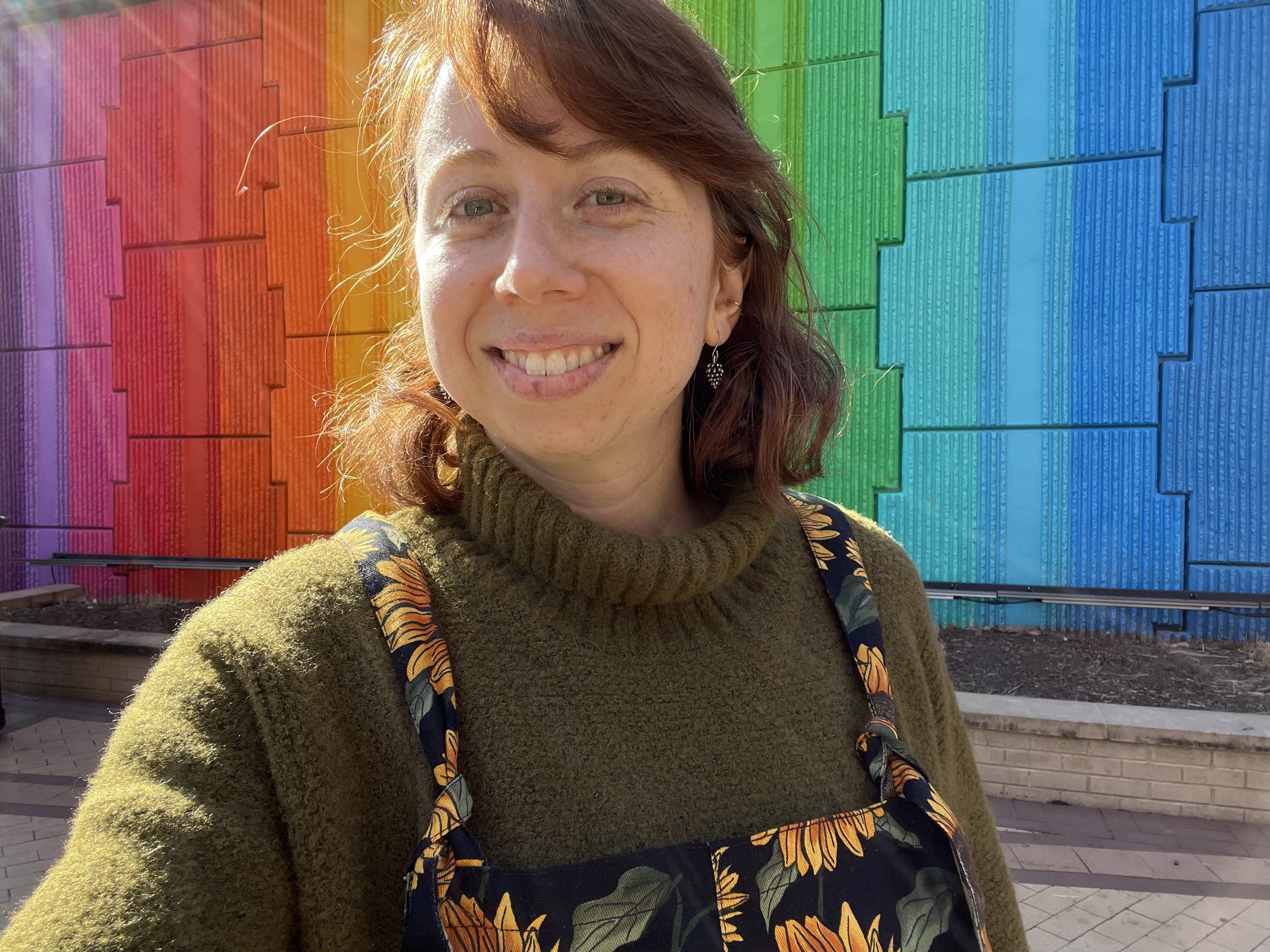
Author Emily J. Weisenberger
I started writing about what I observed, because at least that way, some reader might learn something that could make the world just a little bit safer for human differences. First, I stuck with nonfiction and published some “creative fieldnotes” in the journal Practicing Anthropology. (That piece was about a Black family who organized a group of activists into the Andrew Joseph Foundation after their son was killed as a result of racial profiling and police negligence.) I learned that writing about something I so deeply cared about was beautiful, cathartic, and a type of activism.
Until then, I hadn’t written much fiction, but I loved reading fiction so much I decided to give it a whirl. I found fiction was such a powerful tool because it let me ask “what if we did this a little bit differently?”
Congratulations on your short story “Viable” being included in The Vanishing Point: Best Of 2021-2023 Anthology! Could you please tell readers the premise of this story and what inspired it?
Thanks! “Viable” is about a young woman in a techno-advanced near-future who is trying to get a legal abortion, and I am so grateful The Vanishing Point is publishing it again.

I wrote the story in 2021 after Texas instituted the ban on abortions after 6 weeks of pregnancy. At the time, I found that ban to be almost laughably absurd because it was blatantly inhumane. But I also saw that more states were following suit and the U.S. Supreme Court was becoming overwhelmingly conservative. I was (still am) scared and angry about the abortion ban, and I was anticipating that state governments and the Supreme Court would chip away at reproductive rights until it was officially legal yet almost impossible to get an abortion. I honestly did not expect them to repeal Roe v. Wade, as at the time, I didn’t think politicians would explicitly do something so unpopular.
So, “Viable” was born. It was my best guess for how the future of abortions would look: legal on the surface but inaccessible and even criminalized by layers of bureaucracy. I won’t spoil the story, but I still get chills reading the last scene.
Your short story “The Prairie’s Song” is scheduled to be featured on the podcast Tales to Terrify! Without giving away any spoilers, what can readers/listeners look forward to?
“The Prairie’s Song” is a historical-fiction and horror short story about an isolated colonial-settler in the American west. You can expect eerie vibes, devilish jackrabbits, and the haunting, whistling song of prairie grass. Or is the sound just in his head?
With several popular writing conventions coming up, many authors are getting prepared to meet agents and editors for the first time. Have you ever been to a writing convention or conference? What tips would you give nervous writers?
I’ve been to one! I went to the virtual Jewish Book Council’s writers conference. I learned so much from the panels, but the biggest win was meeting people. I would recommend finding conferences that include lots of opportunities to meet people. During an open group meeting, I ended up connecting with a local author, who I got to meet in person later.
I also paid extra ($20/meeting) to meet independently with a handful of agents and editors. They gave me feedback about my novel-in-progress, and a couple asked me to send it to them when the novel is finished. Connecting one-on-one also gave me better insight into the real work of editors and agents and a foundation from which to reach out to them later. If you’re planning to meet one-on-one with agents and editors, I would recommend preparing an elevator pitch and a list of questions/topics that are relevant to their specific role. Even better, run these by your writer friends/critique group to go into the meetings super prepared.
If you could pick the brain of any author, alive or dead, who would you chat with and why?
I would love to chat with Anna-Marie McLemore. Or maybe I would sit there silently in awe, with a completely blank mind. I find their work to be so beautifully written and heart-rending and, I think, perfect for teens (and adults!) who are asking questions about how to be part of this world. I will forever be grateful for their YA novel Mirror Season.
What are you currently working on?
My main project right now is a middle grade fantasy novel called “Hazel’s Hungry Family.” The protagonist is a Jewish girl who faces competing responsibilities between her family (Grandpa is running for mayor of their small town) and new magical friends who are falling mysteriously sick from pollution (hm, who might be the one causing the pollution??).
The novel is about environmental activism and standing up for what’s right, even if that means defying your family. It’s a mix of lightheartedness—there’s a sweet dog, an overly dramatic monster, a new friend who loves to practice swordfighting—and more serious themes, like learning how to build community and deal with antisemitism.
Where do you hope to be in ten years, in terms of your writing career?
My goal is to be agented and to be able to dedicate most of my working hours to writing novels for children and adults. I also want to continue playing around with weird and wacky short stories, and maybe a little poetry here and there.
Is there anything else you wish to share that I didn’t bring up?
Fun Fact: Some of America’s favorite authors were also anthropologists. Anthropologists Zora Neale Hurston wrote fiction on African American experiences, and Kurt Vonnegut wrote anti-war fiction.
Where can readers learn more about you? (social media, website, etc.)
Website: emilyjweisenberger.com
Twitter: @EJweisenberger
Thanks so much!
Interview with Sci-Fi Author Lyle Stiles
Interview with Sci-Fi Author Lyle Stiles
Welcome Lyle! For readers just discovering your work, could you please give a little introduction of yourself?
Hi, I'm Lyle Stiles, a Brooklyn-born science communicator and author. My writing journey started around 2018 when I wrote a poem ( titled "Tourists") which was published a year later. Since then, I've moved to sci-fi short stories, of which I am currently the author of three.
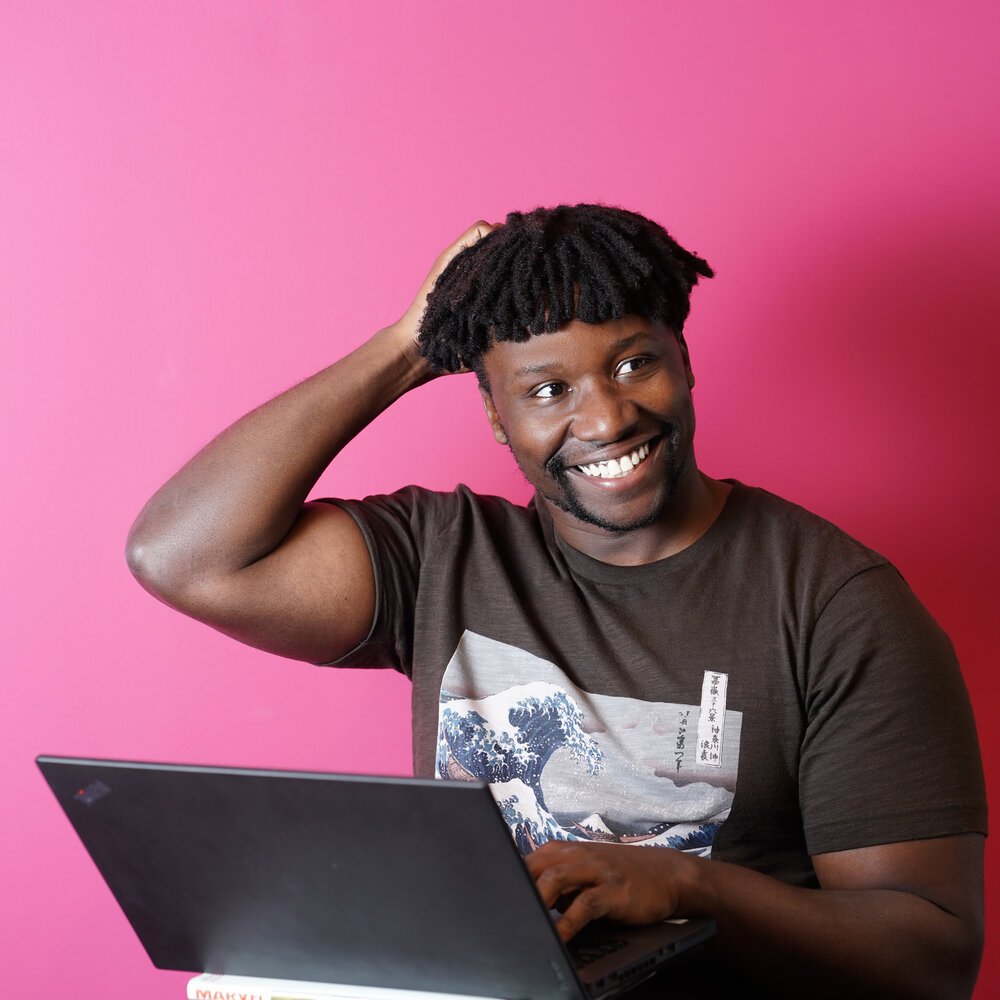
Author Lyle Stiles
Generally, the focus of my pieces is on larger societal or cultural issues, with a pinch of science thrown in for flavor.
I'm also an exercise- and board game-enthusiast who resides in Maryland.
Your website (https://lylestiles.com/) mentions you are a “recovering neuroscience researcher.” Could you tell readers a bit about your science background and how that influences your writing?
I got my neuroscience Ph.D. studying the brains of mice and the memory-boosting effects of aerobic exercise. The overall goal was to better understand how this memory enhancement works in people.
Because it's such a relatable topic that could be useful to many others, I spoke about my work in plain language during several science communication events with the Alan Alda Center for Communicating Science. To reach an even wider audience, I participated in and won a NASA- and National Geographic-led science communication competition (FameLab) where researchers have 3 minutes to talk about their work to panel of judges and the public (like American Idol but for scientists). These experiences made me want to discuss other research topics in ways that would help remove the jargon-filled veil of science so more people could see it as I do–a beautiful way to understand the world.
As a result, I usually try to drop an interesting research fact or scientific development into my stories. For example, my first published story was based on recent work where scientists created xenobots–tiny programmable "lifeforms" created from frog stem cells. Although they are made up of living things (stem cells) and can walk, heal, and work together in groups, are they themselves alive? It's still a matter of debate, so I wrote a time travel story (The Xenobot Paradox) to highlight this advancement and explore philosophical quandries about "life" and agency if this technology became more advanced.
(Note: If you're interested in seeing the xenobots in action, you can find a video of them at my website)
When did you first develop a love for the sci-fi genre?
To be honest, I was always kind of sci-fi adjacent. As a child, I gravitated to books, movies, and franchises like Star Wars.
However, as a teen growing up in Bed-Stuy, Brooklyn in the 00's many of the deeper human issues felt absent or seemed like they lacked depth.
When chapters of history books are filled with people like you being disenfranchised, when alll your immediate family members have personal anecdotes in dealing with prejudice, and when you start experiencing your own similar issues, some sci-fi narratives (like those about people treating aliens differently or vice versa) feel like they barely scratch the surface.
I didn't end up loving sci-fi until later, close to the end of my Ph.D. training, when I discovered N.K. Jemisin and Octavia Butler. Their works showed me the great depths of the human condition that you could infuse into original sci-fi concepts. Their works provided a lot of inspiration for my eearliest attempts at writing sci-fi stories (many of which I hope will never see the light of day).
Congrats on the publication of your short story “The Pox Party” featured in Black Sci-Fi Short Stories (Gothic Fantasy) published by Flame Tree Press! Can you tell us the premise of “The Pox Party” and what inspired it?

In a dystopian future where certain neighborhoods experience climate-related apocalypses (or "pox"es), a teenage girl from one of these low-income areas steals an expensive holo-watch from a rich poverty-vouyèr searching for a theme for their upcoming party. As the teen journeys to a prosperous, pox-free neighborhood to return the watch, she struggles with thoughts of keeping it knowing the item probably means more to her–now that it holds precious recordings of her recently deceased mother.
"The Pox Party" was inspired by the growing disparities in not only housing and income, but also access to technologies that make life easier. I wanted to explore how morality (or at least acceptable behavior) might change or shift in hyper-disparate conditions.
Your dark sci-fi short story “Mephisto and Me” was published in Assemble Artifacts (Summer 2022 Issue no. 2) and they purchased the tv/film rights. Could you please tell readers about this story? Who would you like to play the characters if this gets picked up for tv/film?
After a police officer murders his father, Jerod, a high school junior deals with trauma, resentment, and the sudden appearance of Mephisto--a demon-possesed robot who promises "justice". But what Jerod decides to do (or not do) about the bot could either end his life or everyone else's, as Mephisto's ultimate goal is Armageddon.
If "Mephisto and Me" gets made into a movie, I'd like John Boyega (Finn from Star Wars) or Shameik Moore (voice of Miles Morales in Into the Spiderverse) to play Jerod. For Mephisto, I think Adam Driver (Kylo Ren from Star Wars) would serve as a great voice acting talent for the maniacal bot.
Let’s say you can pick any author, alive or dead, to team up with and co-write a novel. Who are you picking and why?
Hands down, Octavia Butler.
I would've loved to have co-written (or even just assist in the process of creating) a novel with her before she passed away.
She had this impressive skill of "doing more with less" when it came to using words to paint a vibrant picture of futuristic sci-fi or dystopian settings.
More importantly, she managed to instill depth into her works by accessibly reflecting the trying situations and impossible choices her characters have to make being at the intersection of multiple identities (e.g., Dana in "Kindred" being black, modern, and a woman during the era of slavery and Anyanwu in "Wild Seed" being black, immortal, and a powerful woman –throughout time–in a never ending coercive/abusive relationship).
Working with her would've greatly improved my ability to vividly showcase the joys and struggles of my own characters through concise storytelling.
What are you currently working on?
My work in progress (WIP) is a departure from my usual sci-fi short stories (which generally focus on cultural and societal issues). The WIP is a middle grade fantasy novel (called "Terraseeker Academy") that is a project of pure escapism. It features a diverse group of kids who go to a specialized school to learn how to become explorers within the very strange world they live in.
I decided to write it because I felt like I could use a break from the world's heavier heavier issues. Sometimes it's just as rewarding to read a light-hearted book and have a laugh. I hope this fun adventure novel will one day make its way to store shelves where it can engage children and others in the same ways I used to get excited about Animorphs or Goosebumps (neither of which are light-hearted, but both series brought me tons of joy).
Where do you hope to be in ten years, in terms of your writing career?
At that point, I hope to be a published author with several more short stories and at least one series under my belt. I'd love it if at least one of those pieces had a sizeable fan base, but if not, I would still be happy with the act of making publishable quality work.
In addition, a personal goal of mine is to publish in different genres. Currently, I have my eyes on romance and horror, so in ten years it would be nice to have some written pieces within those categories.
Where can readers learn more about you? (social media, website, ect)
Readers can learn more about me at my website Lylestiles.com or follow me on X (formerly twitter) @thewritestiles.
As I am currently recovering from a fairly severe bout of long covid that affected me for much of last year, some info may be outdated. Luckily, I've been regaining much of my health in the last few weeks, so expect to see more activity in the coming months.
Thanks for the great interview, Nico!